Demographic Dynamics of Interrupting Country?
Aufhor: Dhefara Hersaning Ditau
(Indonesian CPDS researcher)
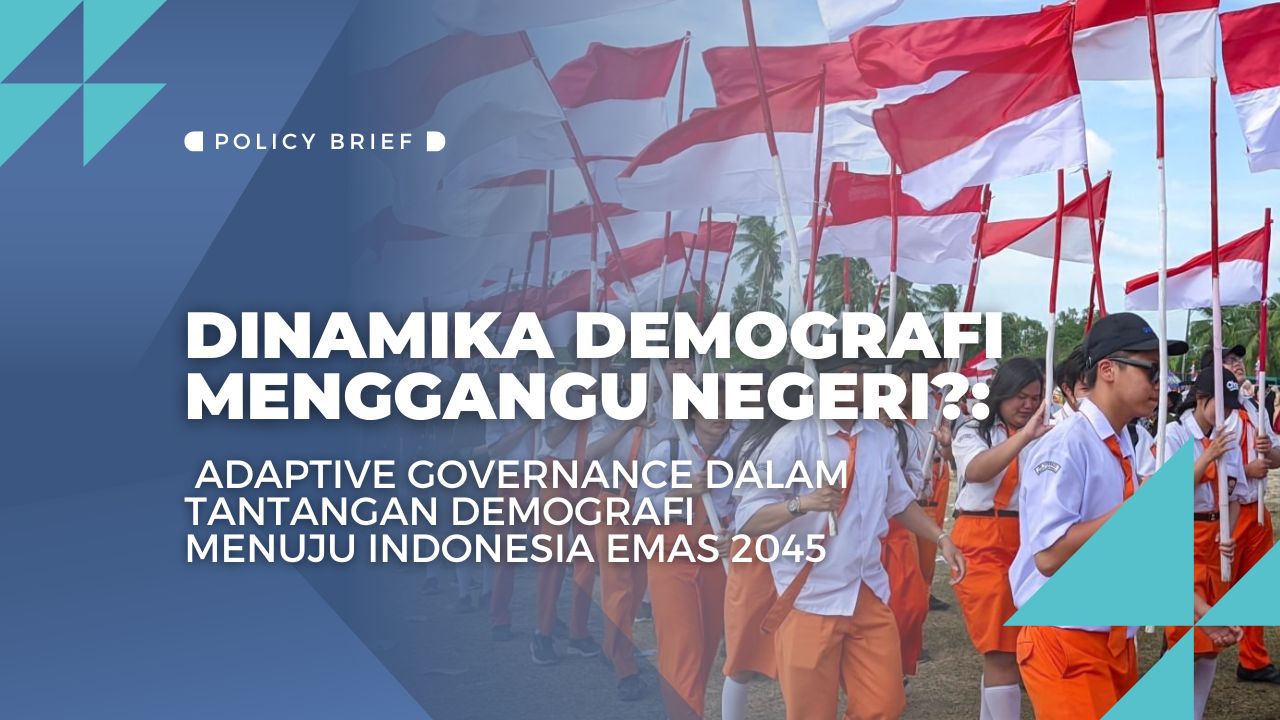
Indonesia is currently at a critical intersection on its way to Indonesia Gold 2045. On the one hand, a demographic bonus offers an unprecedented growth opportunity, with about 69% of the population at a productive age. On the other hand, many demographic dynamics that are complex and cross-eyed, starting at the height of the child's marriage, degrading the wedding number, so that the full extent of a childfree phenomenon threatens Indonesian capacity to optimize this window of opportunity.
This police brief identifies systematic management failures: partial, sectional, unresponsive policy of rapid demographic change. The law checks in marital dismissal, adding BKBN mandate, and ambivalence of normalcy in the KUA to the weak points that become demographic disruption. Without an integrated policy intervention, the vision of Indonesia Gold 2045 is at risk by low quality of human resources, the decline of unplanned fertility, and the increased burden of nonproductive population.
By using the Adaptive Government skeleton, this policy brief recommends three primary policy options: (1) strengthening child marriage regulations through the closing of the marriage dismissal gaps, (2) the BKBN and KUA institutionalized and interintegrated, as well as (3) forming demographic platforms across adaptive and data-based data-time. This recommendation was designed to present flexible, coordinated, and sustainable policy responses to 2045 gold Indonesia.