Human Resources Management in the Digital Era
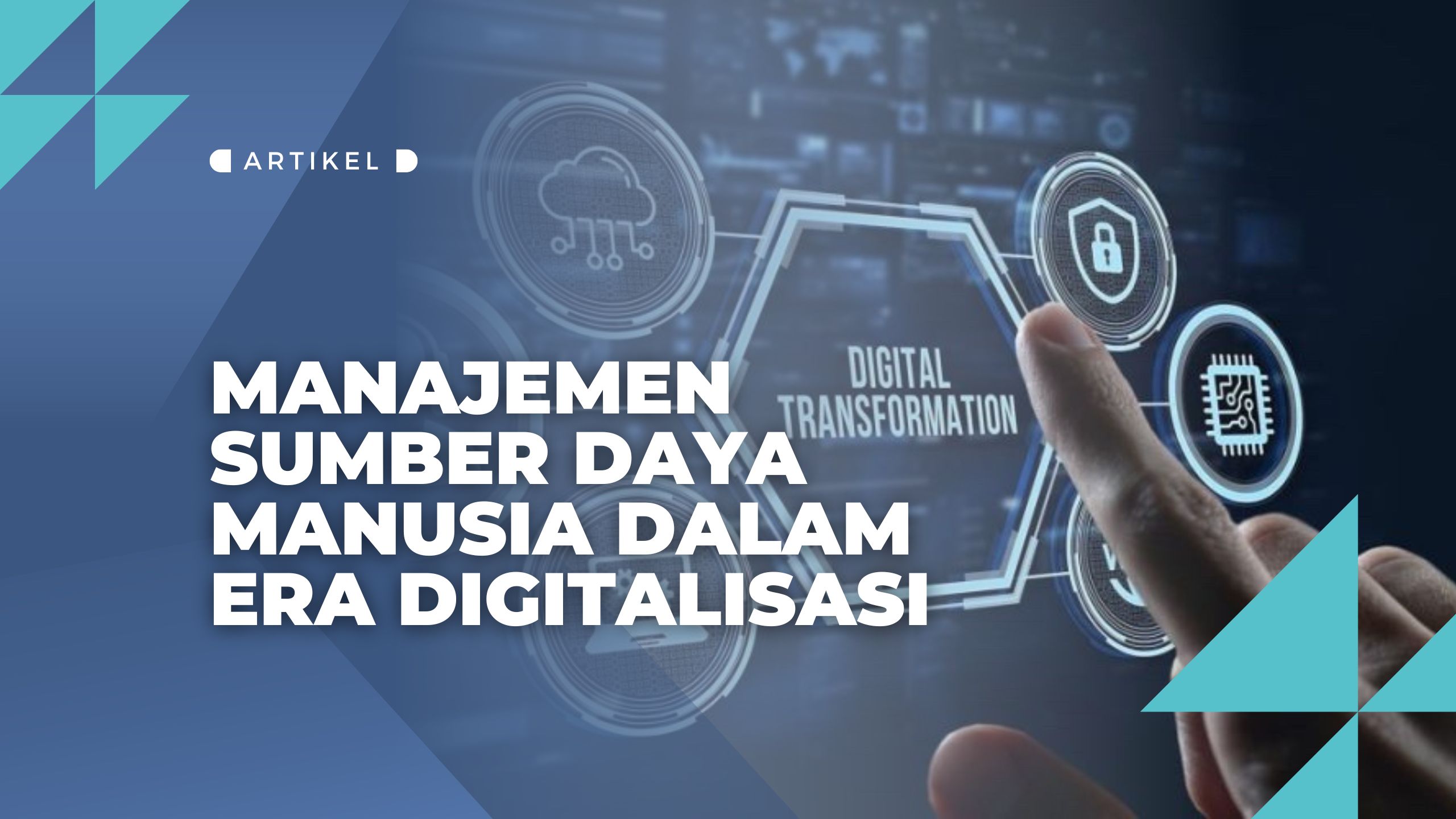
The development of information and communication technology has driven digital transformations in various sectors, one of which is in human resource management. One of the significant aspects of change is the management of human resources, which now focus not only on administrative functions, but also acts as a strategic partner in supporting organizational goals. digitization drives organizations to change the process of managing human resources to be more effective, efficient and data-based. Therefore, organizations are demanded to adapt to maintain the power of competition in the midst of the dynamic change in the business environment (Verhoef et al., 2021; Schlub, 2017).
digital transformation not only changes the business process, but it also affects the way organizations manage its human resources. According to Armstrong and Taylor (2023), the function of human resource management has evolved from administrative activities to strategic partners who are instrumental in supporting the achievement of organization's goals. As far as that goes, Alwy (2022) claims that the MSDM practitioner in the digital age is demanded to have the ability to manage the organization's change, to utilize digital technology, and to develop employee competence to be able to face future challenges.
The digitization has altered many human resource management activities, starting with the recruit process, training, performance assessment, to employee data management (Strohmeier, 2020). The recruiting process is now widely done through digital platforms that are able to reach wider candidates and accelerate the selection process (Zhang & Chen, 2023). The training program also began to exploit Learning Management System (LMS) According to Dasmadi (2023), the application of digital technology to human resource management is able to increase administrative efficiency and accelerate service to employees.
One form of digitized implementation in human resource management is the use Human Resource Information System (HRIS). This system allows organizations to manage employee data, attendance, leave, payroll, to integrate performance assessment. HRIS use helps reduce administrative jobs, minimize logging errors, and accelerate drafting reports for management. HRIS platforms such as Mekari Talenta, LinovHR, GreatDay HR, and SAP SuccessFactor have been widely used by companies in Indonesia to support the HR management digitalization. In addition, management of HR Analytics helps management to analyze labor data so that decision decisions can be done more objectively and based on evidence (Marler & Boudreau, 2017). Thus, the function of human resource management is no longer just the administration of employment, but also supporting drafting organizational strategies through utilization.
In addition to the application of technology, the success of digital transformation in the management of human resources is also deeply influenced by the digital competence of the employees and the SDM practitioner. The organization needs to develop digital skills through upskill and reskilling programs so that the employees can utilize the technology optimal in supporting daily jobs. According to the World Economic Forum (2025), skills like digital literacy, artificially intelligence utilization, data analysis, and adaptability to change are increasingly needed in the workforce. Along with that, Pradandet al. (2023) explains that increasing digital competence is one of the most important strategies in preparing human resources capable of competing in the digital transformation era.
In addition to HRIS, the implementation of the hybrid working system is growing after the COVID-19 pandemic. In the application of this system, companies use digital collaborative applications like Microsoft Teams, Zoom and Google Meet to support communication, coordination and employee performance evaluations. It allows organizations to maintain productivity even though some employees work from different locations. In the government sector, digitization also began to apply through the use of electronic-based employment applications, such as the e- performance system, digital license, as well as the Managing Target of Workers (SKP) online. This implementation aims to increase transparency, accountability and efficiency in the management of civil apparatus.
The success of MSDM digitization also requires an adaptive leadership support for change. Leaders have an important role in creating organizational culture that is open to innovation, encouraging collaboration, and providing support for sustainable learning processes. According to Armstrong and Taylor (2023), organizational transformation will be more effective if supported by leadership capable of managing changes and involving employees in every stage of transformation. In Indonesia, Alwy (2022) also confirmed that the MSDM practitioner not only demands control of technology, but also has leadership, communication, and change management to be implemented optimistically in the organizational environment.
In his travels, digitalization of human resource management is still facing many challenges. In addition to the need for increased digital competence, the organization also had to pay attention to the aspect of data security and the readiness of cultural work in receiving changes. Pradandet al. That suggests that the success of digital transformation is not only defined by technology's sophisticated, but also by the readiness of human resources using it. Moreover, the translation of digitization of human resource management is still facing several challenges, such as the limitation of digital competence of employees, personal data security, as well as resistance to change. Therefore, organizations need to provide sustainable training and strengthen the safety policy of information in order for digital transformations to go optimal.
Untuk mengatasi berbagai tantangan tersebut, organisasi perlu menyusun strategi transformasi digital yang terencana dan berkelanjutan. Strategi tersebut dapat dilakukan melalui peningkatan kompetensi digital karyawan secara berkala, penguatan budaya organisasi yang adaptif terhadap perubahan, serta pengembangan kebijakan yang mendukung pemanfaatan teknologi secara aman dan bertanggung jawab. Selain itu, organisasi perlu memastikan bahwa implementasi teknologi tidak hanya berorientasi pada efisiensi proses kerja, tetapi juga mampu meningkatkan keterlibatan (employee engagement) dan kesejahteraan karyawan. Menurut Mahmudah et al. (2025), keberhasilan transformasi digital dalam pengelolaan sumber daya manusia sangat dipengaruhi oleh sinergi antara teknologi, kompetensi SDM, dan komitmen organisasi dalam mengelola perubahan. Sejalan dengan itu, Dasmadi (2023) menegaskan bahwa pengembangan keterampilan digital, dukungan manajemen, serta pemanfaatan teknologi informasi yang tepat menjadi faktor penting dalam menciptakan pengelolaan sumber daya manusia yang efektif dan berkelanjutan di era digital.
Secara keseluruhan digitalisasi telah membawa perubahan yang signifikan terhadap fungsi manajemen sumber daya manusia, mulai dari proses rekrutmen, pelatihan, penilaian kinerja, hingga pengambilan keputusan berbasis data. Pemanfaatan teknologi seperti HRIS, HR Analytics, serta berbagai platform digital mampu meningkatkan efektivitas dan efisiensi pengelolaan SDM. Namun demikian, transformasi digital juga menuntut organisasi untuk terus meningkatkan kompetensi digital karyawan, memperkuat keamanan data, serta membangun budaya organisasi yang adaptif terhadap perubahan. Oleh karena itu, penerapan teknologi perlu diimbangi dengan pengembangan kualitas sumber daya manusia agar organisasi mampu menghadapi tantangan dan memanfaatkan peluang di era digital secara berkelanjutan (Armstrong & Taylor, 2023; World Economic Forum, 2025).
Author: Franciska Yuniarti, SE. (Indonesian CPDS researcher)
Reference
Alwy, M. A. (2022). Manajemen Sumber Daya Manusia di Era Digital Melalui Lensa Manajer
Sumber Daya Manusia Generasi Berikutnya. SIBATIK: Jurnal Ilmiah Bidang Sosial,
Ekonomi, Budaya, Teknologi, dan Pendidikan, 1(10), 2265–2276.
https://doi.org/10.54443/sibatik.v1i10.334
Arianto, Y., Darsono, S., & Zaman, B. (2023). Pengelolaan Digitalisasi Konstruksi Sumber Daya
Manusia di PT Adhi Karya (Persero) Tbk Departemen Gedung. Jurnal Profesi Insinyur
Indonesia, 1(4), 119–124. https://ejournal2.undip.ac.id/index.php/jpii/article/view/19231
Armstrong, M., & Taylor, S. (2023). Armstrong’s handbook of human resource management
practice (16th ed.). Kogan Page.
Dasmadi. (2023). Digitalisasi manajemen sumber daya manusia dalam praktik. Jurnal Ekonomi,
Sosial & Humaniora, 5(1), 9–13.
https://www.jurnalintelektiva.com/index.php/jurnal/article/view/988
Hijrasil, Maisharah, S., Widodo, Z. D., Darsono, & Manuhutu, H. (2023). Penerapan teknologi
Human Resource Information System (HRIS) dalam meningkatkan efisiensi dan efektivitas
manajemen SDM. Jurnal Pendidikan Tambusai, 7(2).
https://jptam.org/index.php/jptam/article/view/7340
Mahmudah, N., Cahyani, D., & Ali, M. (2025). Transformasi Digital Dalam Pengelolaan Sumber
Daya Manusia: Tinjauan Konseptual dan Studi Literatur. Pendas: Jurnal Ilmiah Pendidikan
Dasar. https://journal.unpas.ac.id/index.php/pendas/article/view/37510
Pradana, R. A., Pitaloka, D., Rukmana, I. L., & Gunawan, A. (2023). Manajemen Sumber Daya
Manusia Berbasis Digital: Keterampilan dan Peran Di Era Digital. COMSERVA: Jurnal
Penelitian dan Pengabdian Masyarakat, 2(9).
https://comserva.publikasiindonesia.id/index.php/comserva/article/view/583
World Economic Forum. (2025). The Future of Jobs Report 2025. World Economic Forum.