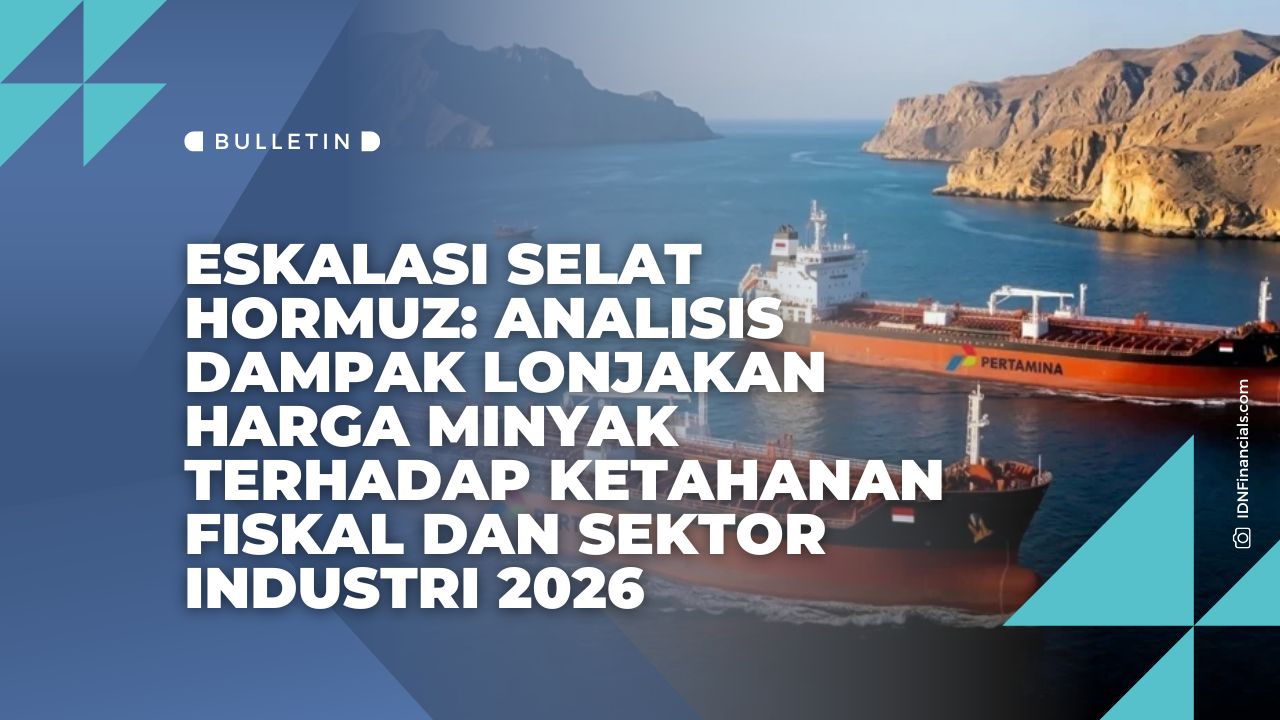
Escalation Strait Hormuz: Oil Pricing Impact on Fical Defense and Industrial Sector 2026 · Global Voices
Geopolitic tension in the Straits of Hormuz increases the risk of interference against global supply chains. Given that this area has run about 20% of the world's oil trade, each escalation is potentially affecting the physical supply and expectations of the energy market. In another pressure scenario, global oil prices potentially survive at a high level, which in turn increases uncertainty in international trading stability.
The conditions became relevant to the domestic economy when compared to the assumption that the Indonesian fiscal macros set oil prices at the cost of 70 per barrel. At the market prices are above that assumption, there is a deviation potential that can increase fical burden and risk imported inflation. Through the transmission mechanism of energy prices, rising oil prices will drive up domestic energy costs and trigger inflation pressure, especially from the side of the offer.
Author: Najada Ayunda Sovia, S.matt, M.Stat. (Indonesian CPDS researcher)