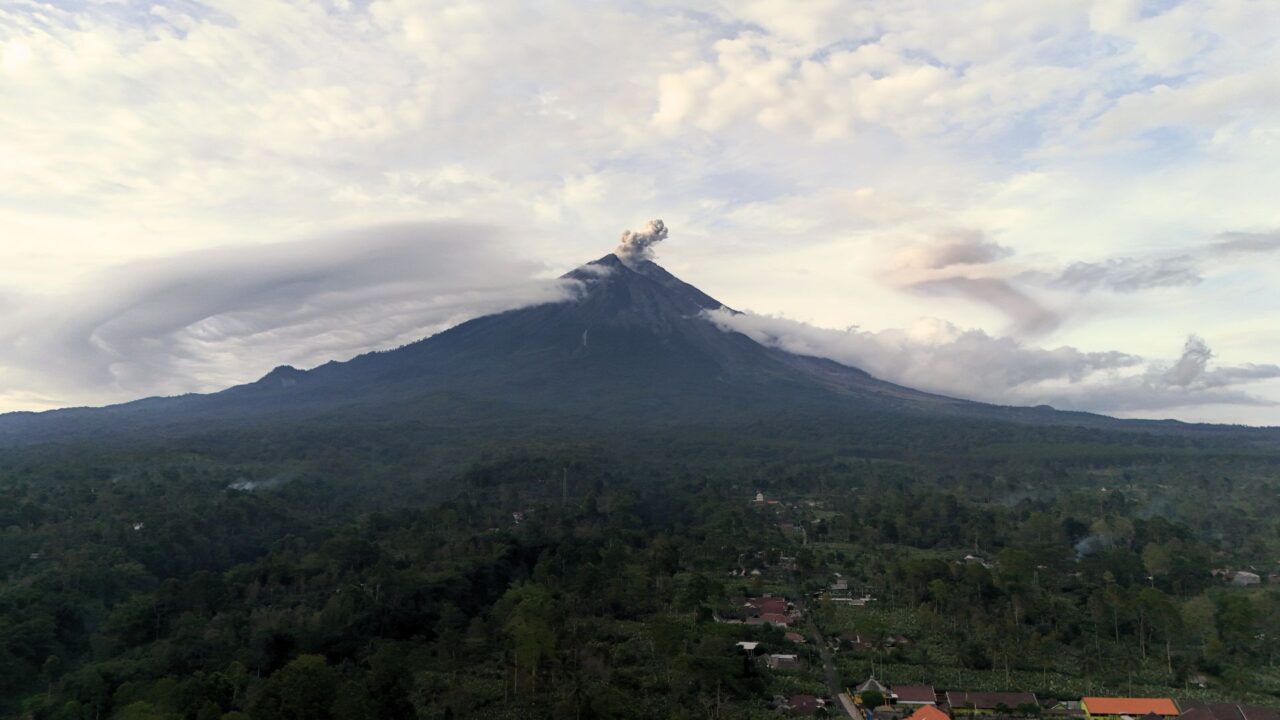
This study aims to comprehensively review the development of research and public policy in the handling of the disaster of Mount Semeru, with focus on impacted areas in the village of Supiturang, Pronojiwo, Lumajang District. This region is one of the high levels of vulnerability to volcanic activity, especially after the massive eruption of Mount Semeru in 2022 which resulted in significant impacts, either by the victims of lives, the destruction of infrastructure, or the social-economic society.
The Urgences of this study lie in the importance of understanding how far past research and public policy have contributed in support of mitigation, emergency response, as well as post-disaster recovery. This study is attempting to identify trends, focus studies, and gaps in the scientific literature related to the handling of volcanic disasters, and also analyzing policy products produced by various interest makers, both structural actors such as government agencies and private sectors, and non-structural actors like the community.
The method used was a qualitative exploration approach with a combination of literate studies and bibliometric analytics using Biblioshines on R Studio to visualize existing research maps. Moreover, empirical data obtained through Focus Group Discussion, a deep-tech interview. snowball sampling, as well as documenting my board's activities. Analysis continued using approach Soft System Methodology (SSM), including drafting ♪ rich picture ♪ And CATWOE analysis (Customers, Actors, Transformation, Worldview, Owner, Environmental) to understand the dynamics of the system and the relation between actors.
This research is expected to provide a thorough picture of the interconnectedness between research and policy in the handling of the disaster of Mount Semeru, and it produces strategic recommendations to strengthen more integrated, adaptive, evidence-based hate management.
CPDS Admin