
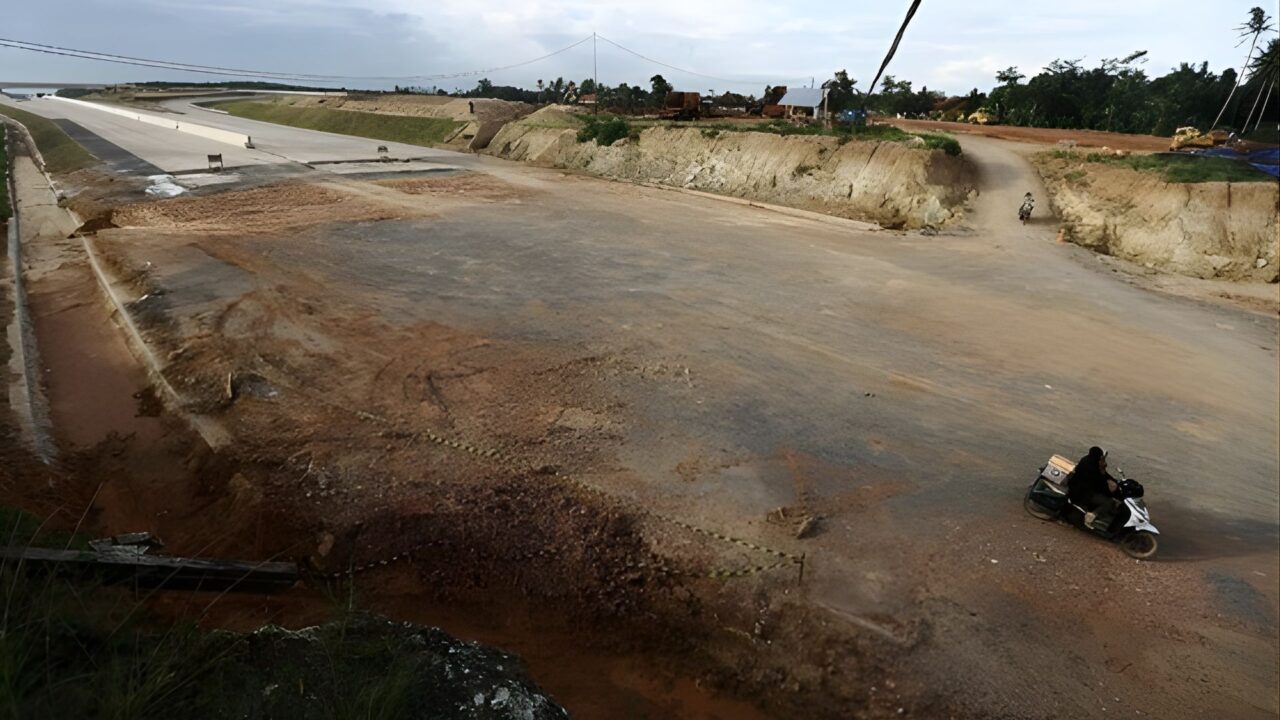


This study aims to reveal the inequality of development in Indonesia through analysis of physical and digital infrastructure interconnecting with approaches. "Connected vs. Unconnected Areas." This study maps the condition of 38 provinces in Indonesia to understand the extent of access to road infrastructure and the internet contributes to development incubations. The two main indicators used are Road Access Percentage (RAP) and Internet Access Percentage (IAP), which is calculated by the secondary data of the Statistics Center (BPS), the Ministry of Public Works and People's Housing), and the Ministry of Communications and Information.
Through the approach of quadrant analysis, this research classifies the province into four categories, which is Connected, All-Connected, Semi-Unconnected, and Unconnected, using national average threshold (RAP 73.20% and IAP 94.44%). Research results show that the Java Island region and parts of the Sumatra region tend to be in the category Connected, marked with a relatively high level of physical and digital infrastructure access. Instead, East Indonesia as well as remote areas are still dominated categories Unconnected, which shows the limitations of access to basic infrastructure.
Furthermore, this study identifies that the inequality is not only influenced by geographical factors like the conditions of islands, mountains, and the isolation of the region, but also by the disparity of infrastructure investment and the implementation of uneven policy between areas. These conditions affect public service access gaps, economic opportunities, and the quality of people's lives.
These research results are expected to contribute in the development of more exclusive and data-based development policies. In addition, this study also offers strategic recommendations to accelerate the alignment of physical and digital infrastructure to encourage sustainable and equal national connectivity.
CPDS Admin