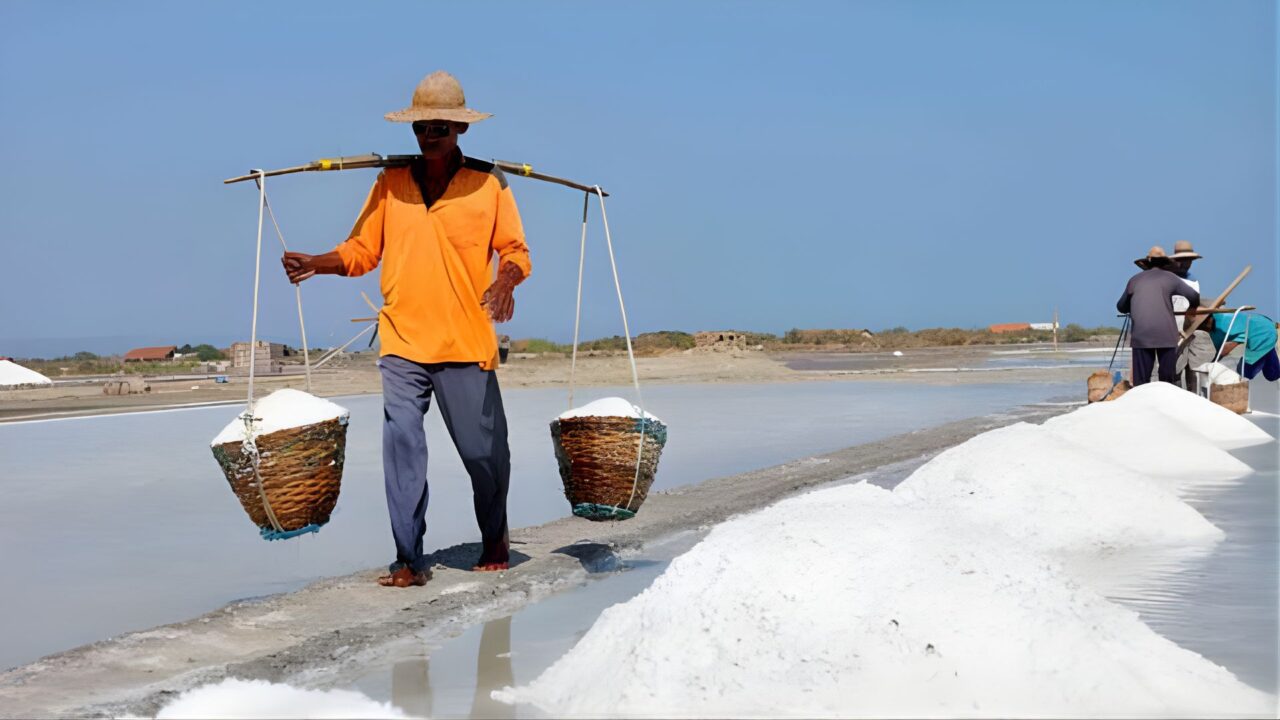
This project aims to analyze and design collaborative strategies between warmers in order to empower salt farmers in the Pamekasan district. Saline farmers in Pamekasan face various challenges, such as limited access to technology, lack of training in business management, as well as low sales power in the market. Therefore, effective collaboration between the local government, the private sector, the educational institutions, and society became the key to improving the welfare of salt farmers and encouraging the economic sustainability of this sector.
The background of this project focuses on the synergy importance of various parties to create environments that support the growth of salt farmers economy. Pamekasan districts have huge potential in the garage sector, but not optimal in the utilization of resources. It's a well-planned collaboration between government, private sector and community organizations that can help create more innovative solutions in improving the production and salt marketing, and giving the farmers the training they need.
The whole point of this project is to design a collaborative model that involves various interests, which will provide support in aspects of technology, training and marketing. This project also aims to identify the challenges and opportunities in this collaboration and to give a policy recommendation that can be applied to strengthen the economic empowerment of salt farmers in Pamekasan.
The expected impact of this project is an increase in the economic capacity of salt farmers through access to new technology, an increase in business management, and the expansion of salt product markets. With a good collaboration between my makers of interest, the garage sector in Pamekasan is expected to develop more sustainable and more economic benefits for the local community.
CPDS Admin